
Blog
The 5 Decisions to Make Before Planning Your Wedding
July 18, 2026 · Updated July 18, 2026
Before booking your venue or photographer, discover the five essential decisions every engaged couple should make to save money, reduce stress and plan a wedding that reflects what matters most.
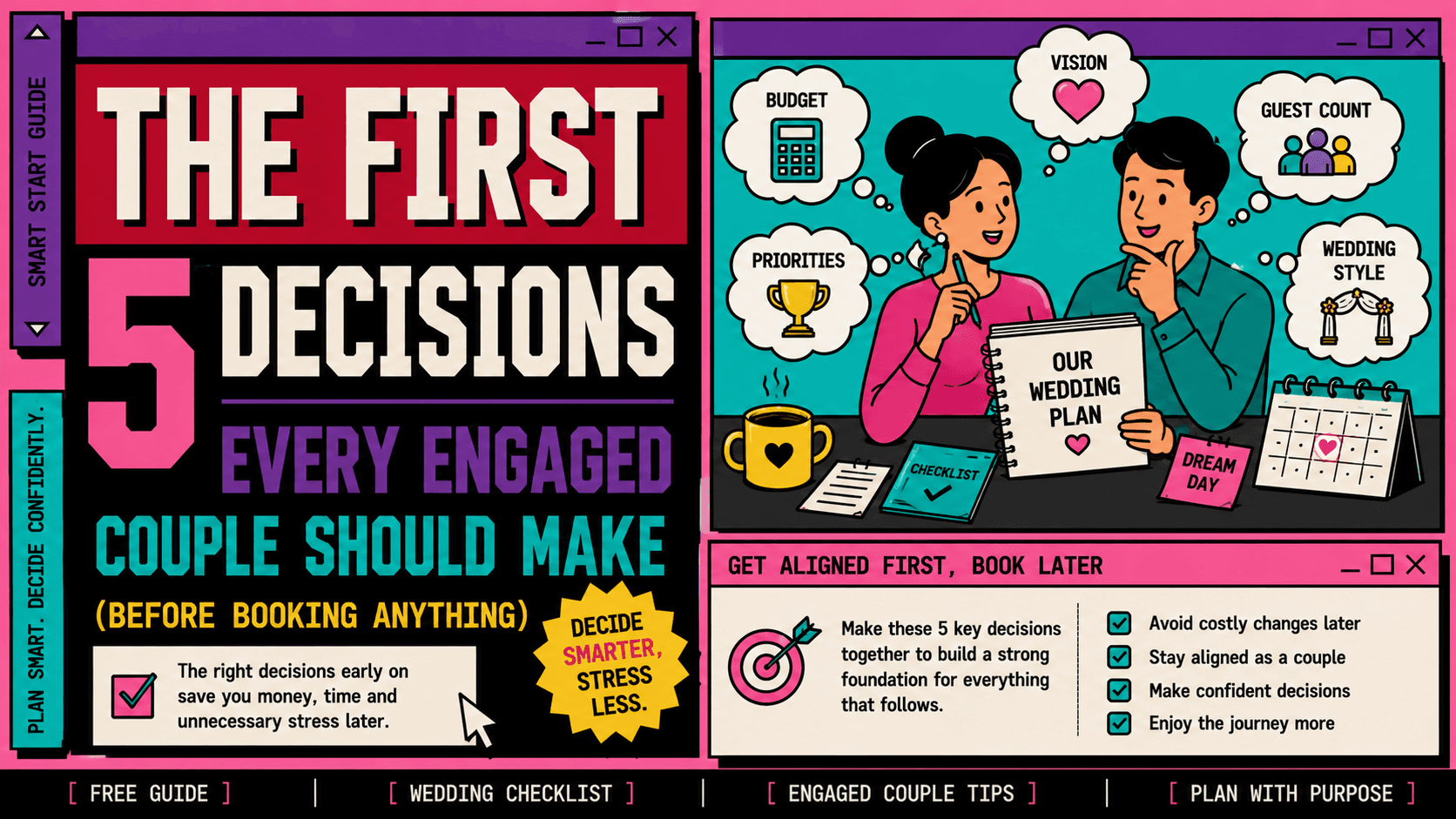
The First 5 Decisions Every Engaged Couple Should Make (Before Booking Anything)
Getting engaged is exciting. Naturally, most couples jump straight into searching for venues, photographers or wedding inspiration on Instagram.
But here's the problem: booking vendors isn't the first step of wedding planning.
The first step is making a few important decisions together. Get these right, and every decision afterwards becomes much easier. Get them wrong, and you'll likely spend months changing your mind, overspending or arguing over details that could have been avoided.
1. Decide Your Maximum Budget
Before looking at venues or packages, agree on one number: the absolute maximum you're comfortable spending.
This isn't about asking, "How much does a wedding cost?" It's about asking, "How much are we willing to spend?"
Your budget influences almost every decision you'll make—from the venue and guest count to photography, décor and entertainment. Setting it first helps you avoid falling in love with options that simply don't fit your finances.
Ask yourselves:
How much have we already saved? Will anyone be contributing? Are we comfortable taking on debt for our wedding?
2. Decide What Matters Most
Every couple values different things.
Some dream of incredible food. Others care most about photography, an intimate celebration or simply creating a memorable experience with family and friends.
The mistake many couples make is trying to have everything. In reality, every wedding has trade-offs.
Instead of asking, "What should we include?" ask:
If we could only spend extra on three things, what would they be?
Knowing your priorities makes it much easier to say no to unnecessary upgrades later.
3. Decide Who Makes the Final Decisions
Wedding planning often involves more than just the couple.
Parents may have expectations. Relatives may offer opinions. Friends will happily recommend what they did.
There's nothing wrong with accepting advice, but it's important to decide early who has the final say.
Whether your wedding is fully self-funded or supported by family, having this conversation upfront can prevent unnecessary stress later.
4. Decide What Kind of Wedding You Actually Want
Forget what social media tells you for a moment.
Ask yourselves:
Do we want a grand celebration or something intimate? Do we prefer a traditional wedding or a modern one? Are we planning this for ourselves, our families, or a little of both?
There's no right answer.
The best weddings aren't the most expensive—they're the ones that genuinely reflect the couple.
5. Decide Your Guest List Before Your Venue
Many couples book a venue first and only realise later that it doesn't suit the number of guests they actually want to invite.
Instead, estimate your guest list before viewing venues.
Even a rough number will help you:
Choose an appropriately sized venue. Build a realistic budget. Estimate catering costs. Plan your wedding timeline more accurately.
You don't need the final list yet—just a realistic starting point.
Every Wedding Decision Has a Domino Effect
Wedding planning isn't a series of separate decisions—they're all connected.
Increase your guest list, and you'll likely need a larger venue, more tables, more catering, bigger floral arrangements and a higher overall budget.
Choose a destination wedding, and your guest count may naturally decrease.
Spend more on photography, and you may choose simpler décor.
The earlier you understand these trade-offs, the easier it becomes to plan a wedding that fits both your vision and your budget.
The Best Time to Plan Is Before You Start Booking
Wedding planning doesn't begin when you pay your first deposit. It begins with honest conversations.
Before contacting vendors or comparing packages, spend an evening discussing these five decisions together.
They'll become the foundation for every choice you make—and they'll help you build a wedding that's truly yours, rather than one shaped by expectations or impulse.