
Blog
How to Organise a Wedding Styled Shoot in Singapore
October 3, 2026 · Updated October 3, 2026
Plan a wedding styled shoot with clear goals, responsibilities and useful portfolio outputs. A Singapore vendor guide covering collaborators, budgets, logistics, permissions and delivery.
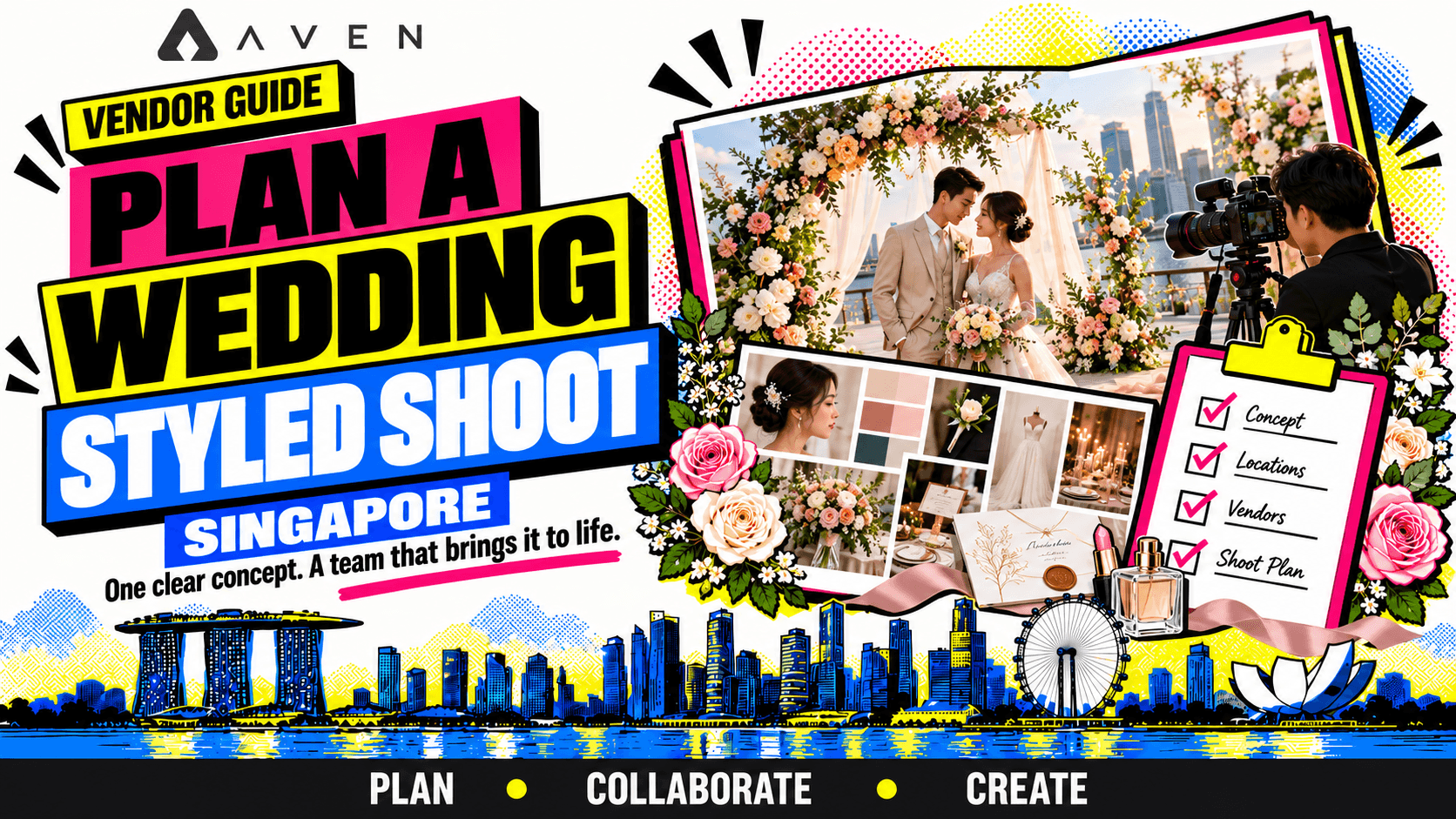
A styled shoot works best when everyone knows what they need from it
A wedding styled shoot brings vendors together to create a planned wedding concept. It can help you demonstrate a new style, fill a portfolio gap or build working relationships.
But a beautiful concept does not automatically produce useful material for every participant. A florist may need wider installation views, a bridal boutique needs the garment shown clearly, and a venue needs photographs that accurately represent its space.
The shoot needs a shared brief and specific outputs for each collaborator.
This guide explains how to organise a wedding styled shoot in Singapore, from the first idea to delivery and publication.
If you are developing your first portfolio, read how to build a wedding portfolio before you have many clients. For the wider business roadmap, use the complete Singapore wedding vendor business guide.
1. Define the business purpose before choosing the aesthetic
Start with the reason for the shoot.
You might want to demonstrate floral styling for intimate venues, create examples of a bridal look, photograph a new attire collection or show how several services work together.
Write a short objective:
“We want to create portfolio material for an intimate solemnisation concept, showing the ceremony setup, bridal styling and couple portraits.”
Then list what would make the shoot worthwhile. That could be a complete gallery, clear product photographs, a short film or a set of vertical clips.
Avoid planning a large production around a mood board without knowing how the material will support your offer.
Your wedding business niche and ideal wedding client profile can help you choose a relevant direction.
2. Set the concept and scope in one shared brief
Prepare a brief that collaborators can assess before agreeing to join.
Include:
- The objective and intended audience.
- The visual concept and reference material.
- The proposed venue, date and working hours.
- The setups or scenes you plan to create.
- The services and people required.
- The intended photographs, recordings and other outputs.
- The proposed publication and usage arrangements.
- The budget and any unresolved costs.
Keep references focused. Explain which elements matter, such as colour, lighting, arrangement scale or garment styling.
Distinguish confirmed details from proposals. If the venue or date is still tentative, say so.
A clear brief helps vendors decide whether the project fits their work and whether the requested contribution is manageable.
3. Appoint one person to coordinate the project
Several vendors can contribute creatively, but the project needs someone responsible for bringing the plan together.
The organiser should maintain the brief, schedule, contact list, budget and final decisions. Each collaborator should still control the work they have agreed to provide.
Clarify who approves changes. A new setup, additional outfit or extra filming requirement can affect the entire schedule.
Use a shared planning document for confirmed information. Group chats are useful for discussion, but important decisions should be recorded somewhere everyone can find.
If you are organising the shoot yourself, allow time for coordination as well as your own service. You may need support on the day if you also have a substantial delivery role.
4. Choose collaborators whose work fits the brief
Invite vendors because their service and approach suit the project.
An intimate ceremony shoot may need a venue, photographer, florist, bridal attire provider, makeup artist and participants. Add a videographer, stationery provider, stylist or other service where their contribution has a clear purpose.
Entertainment and coordination vendors need particular consideration. A musician may need suitable audio recording, while a coordinator may need behind-the-scenes material showing their process. Decorative inclusion alone may not provide useful evidence of their service.
When inviting someone, explain:
- Why their work fits.
- What you are asking them to contribute.
- What they can expect to receive.
- What costs or commitments are involved.
- Which decisions remain open.
For outreach guidance, read how to pitch collaborations to wedding venues and other vendors.
5. Agree on contributions and costs before committing
Collaboration does not automatically mean every contribution is free.
List the costs and agree who pays for each one. These may include venue access, materials, attire preparation, transport, equipment rental, participants, crew, food and cleaning.
Record whether each contribution is paid, discounted, loaned or provided under a specific exchange arrangement.
| Item | What to agree |
|---|---|
| Venue | Access hours, permitted use, fees and reinstatement requirements. |
| Materials | Purchase costs, ownership and disposal or collection. |
| Attire and accessories | Loan period, handling, cleaning and damage arrangements. |
| Participants and crew | Working hours, payment and relevant permissions. |
| Photo and video | Scope, deliverables, editing and delivery timing. |
| Shared expenses | Budget owner, payment process and approval of additional spending. |
Confirm what happens if the project is postponed or cancelled. A vendor who purchases perishable materials has different exposure from someone contributing reusable equipment.
6. Check venue suitability and access requirements
Choose a venue that works for both the concept and the production.
Confirm permission for the intended activity. Discuss the number of people, equipment, floral installation, furniture movement, lighting and filming requirements.
Ask about:
- Access and loading arrangements.
- Setup, shooting and teardown time.
- Available power and permitted equipment.
- Changing and preparation areas.
- Storage and holding space.
- Restrictions on fixtures, candles or other styling elements.
- Cleaning and reinstatement.
- Other activities taking place during the booking.
For an outdoor concept in Singapore, prepare a workable weather alternative. Consider how heat, rain and exposure could affect participants, equipment, makeup and flowers.
If the venue is being represented in the final material, agree on what may be shown and how it will be credited.
7. Plan the outputs for each vendor
Create a deliverables list before the shoot.
A shared gallery may be useful, but it should contain the views each collaborator needs to explain their service.
| Collaborator | Examples of useful outputs |
|---|---|
| Florist or stylist | Wider installation views, detail photographs and clear scale. |
| Bridal attire provider | Full-length views, garment details and agreed styling variations. |
| Makeup and hair artist | Clear views of the finished look under suitable lighting. |
| Venue | Accurate space photographs and the agreed event setup. |
| Photographer | A coherent editorial collection demonstrating their approach. |
| Videographer | A planned sequence with sufficient coverage for the agreed edit. |
| Stationery provider | Readable designs and detail photographs without private information. |
| Entertainment provider | Performance material with usable sound where agreed. |
| Coordinator | Process photographs or recordings that accurately show their contribution. |
Define quantities or formats where they matter. Agree whether delivery includes edited images, finished videos, selected clips or anything else. Do not assume raw files are included.
8. Write a shot list that balances the shared concept and individual needs
Group the shot list by setup so the team can work efficiently.
For each setup, note the required images or clips, participating vendors, estimated time and any preparation needed.
An intimate ceremony concept might include:
- The venue before styling.
- The completed ceremony arrangement.
- Floral and stationery details.
- Bridal attire and beauty views.
- Participant portraits within the setup.
- A planned movement sequence for video.
- Behind-the-scenes material where agreed.
Allow dedicated time for product and service details. They are easy to miss when the team focuses only on the main portraits.
Prioritise essential outputs before optional ideas. If time becomes tight, everyone should know which material must still be captured.
9. Build a realistic schedule with preparation and teardown
Work backwards from the required outputs and available venue hours.
Include arrival, unloading, preparation, installation, lighting tests, styling checks, shooting, breaks, collection and reinstatement.
Check dependencies. Portraits cannot begin before makeup and attire are ready. Wider installation views may need to happen before participants enter the setup. Video coverage may require time without still photography happening simultaneously.
Add reasonable buffers and confirm the schedule with the people doing the work.
Send a final call sheet containing the location, access instructions, timings, contacts and individual responsibilities. Keep it updated if the plan changes.
Our wedding vendor timeline coordination guide explores the same planning principles for live events.
10. Agree on usage, permissions and credits
Put publication arrangements in writing before production.
Clarify who may use the material and for which purposes. Website portfolios, social posts, paid advertising and third-party publication can require different arrangements.
Discuss:
- The material each participant will receive.
- Permitted publication channels and uses.
- Any embargo or coordinated launch date.
- Required vendor credits and tags.
- Whether cropping or other alterations are allowed.
- Participant permissions and any relevant restrictions.
- Usage rights for supplied music, artwork and other material.
Where participants or clients are identifiable, ensure the applicable permission arrangements are addressed. Do not assume that agreeing to attend automatically settles every future use.
Keep records of the agreed terms and the final credit list. Clear arrangements reduce confusion after the material is delivered.
11. Check the work during the shoot
Review key images and recordings before moving on from each setup.
Make sure garments sit correctly, arrangements are complete and the required details are visible. Check that the images accurately represent the work being contributed.
For video, verify focus, movement and sound where relevant. A musician’s performance recording is much less useful if the audio was never properly captured.
Give collaborators a reasonable opportunity to flag problems within their area. Resolve them while the setup is still available.
If a new idea changes the scope or schedule, assess it before proceeding. Protect the essential outputs and the venue’s agreed end time.
12. Deliver the material through an agreed process
After the shoot, follow the delivery schedule and formats already agreed.
Organise the material so vendors can find their relevant outputs. Include the approved credit list and any publication restrictions.
Where a review stage is included, define what it covers. Correcting a missing credit or inaccurate detail is different from requesting an entirely new editing style.
Do not promise an unrestricted revision process unless you have planned and priced for it.
If delivery is delayed, communicate a revised timeline promptly. Collaborators may be planning launches or other activity around the material.
Keep the original agreements and project records available so questions about use or delivery can be resolved consistently.
13. Present the shoot accurately in your portfolio
Label the project as a styled shoot, editorial collaboration or demonstration, as appropriate.
Explain the brief, your contribution and what the work demonstrates. Credit the collaborators according to the agreement.
Avoid presenting staged activities as evidence of a completed client wedding. A planned ceremony setup can demonstrate styling and visual work, but it does not establish experience handling a live wedding programme.
For coordinators and planners, be particularly clear about whether you organised the shoot, designed its timeline or contributed another specific service.
Use the material to support your brand positioning, while keeping your experience and role understandable.
14. Review whether the project achieved its purpose
Compare the final outputs with the original objective.
Ask:
- Did each collaborator receive useful material?
- Did the shoot fill the intended portfolio gap?
- Were the costs and working hours manageable?
- Did the team follow the agreed responsibilities?
- What caused delays or misunderstandings?
- What would you change before another collaboration?
If you use the material in marketing, record the relevant response over time. Enquiries may help you assess its usefulness, but a single shoot does not establish demand for an entire service.
Build future collaborations around what you learned. Our guide to building a wedding vendor referral network explains how relationships can develop beyond one project.
Frequently asked questions about wedding styled shoots
Does a styled shoot need to include every vendor category?
No. Include the services needed to achieve the objective. More participants create more coordination and output requirements.
Should collaborators contribute for free?
Agree on the arrangement rather than assuming it. Each vendor should understand the costs, contribution and expected benefit before joining.
Can we use the material in advertisements?
Confirm that the necessary rights and permissions cover advertising. Portfolio or social publication arrangements should not automatically be treated as permission for every use.
Do we need professional models?
Choose participants who suit the brief and agree clear working and permission arrangements. The decision depends on the required performance, budget and concept.
Can a styled shoot replace real wedding experience?
It can demonstrate creative work and preparation under planned conditions. Live weddings provide additional evidence of working with actual event demands.
What if a collaborator cannot attend?
Use the replacement or postponement process agreed during planning. Reassess the concept and deliverables if their contribution was essential.
How many images should each vendor receive?
Agree on useful outputs before the shoot. The appropriate quantity depends on the contribution and intended use; there is no single number that suits every collaborator.
Your wedding styled shoot checklist
Before the shoot, confirm that:
- The business objective is clear.
- The shared brief describes the concept and scope.
- One person coordinates the project.
- Each collaborator’s contribution is agreed.
- Costs and additional spending approvals are recorded.
- Venue access and production requirements are confirmed.
- The deliverables list covers each participant’s needs.
- The shot list and schedule are realistic.
- Usage, permissions and credits are documented.
- Backup and cancellation arrangements are understood.
- Delivery dates and review stages are agreed.
- The work will be presented accurately.
A well-planned styled shoot gives collaborators useful evidence of their work and a clearer understanding of how they can work together.
Continue with how to build a wedding vendor portfolio, or return to the complete Singapore wedding vendor business guide for the wider roadmap.