
Blog
When Parents Help Pay for the Wedding: What to Discuss Early
October 27, 2026 · Updated October 27, 2026
Accepting help with your wedding can be a generous family gesture. Clarify contributions, guest lists, decisions and ang bao arrangements early so everyone understands the plan.
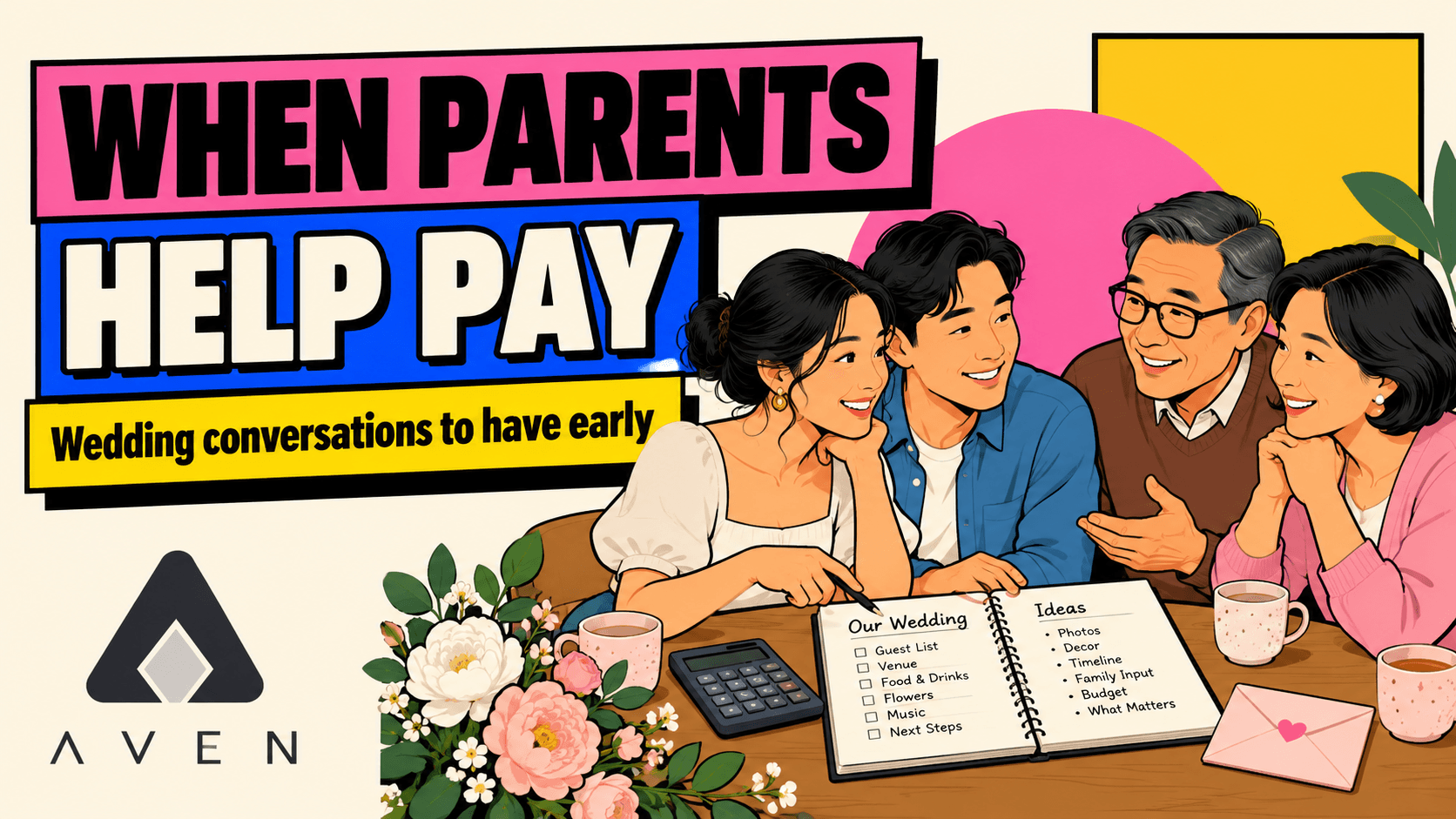
A generous offer deserves a clear conversation
“We’ll help with the wedding.”
It is a lovely thing to hear. It can also mean several different things.
Your parents might be offering a fixed sum, paying for the banquet or covering additional guests. You might understand the offer as a contribution towards a celebration you will organise yourselves.
Neither interpretation is necessarily unreasonable. The difficulty comes when everyone plans around a different understanding.
Before accepting help or making bookings, discuss what the contribution covers and how decisions will be made.
You can be grateful and ask practical questions at the same time.
For the wider planning process, start with our Ultimate Singapore Wedding Planning Guide.
First, agree as a couple on what you are comfortable accepting
Before discussing amounts with your families, talk privately about the kind of help you would welcome.
Consider:
- Would you prefer a fixed contribution or help with a particular expense?
- Which wedding decisions matter most to each of you?
- What involvement would you be comfortable sharing?
- Would either of you feel uncomfortable accepting money?
- What celebration could you manage if the contribution did not happen?
One partner may see family support as a normal gesture. The other may worry about expectations attached to it.
Listen to those concerns before giving an answer on behalf of both of you.
You do not need to reject help to remain involved in your own wedding. You do need an arrangement you both understand.
Clarify whether the offer is a gift, a loan or payment for something specific
Start with the nature of the contribution.
| Arrangement | What to clarify |
|---|---|
| Gift towards the wedding | Amount, timing and any intended purpose |
| Family loan | Amount, repayment expectations and timing |
| Payment for a specific service | The exact service, agreed scope and spending limit |
| Contribution towards extra guests | Which guests and which associated expenses are included |
| Reimbursement after payment | What the couple must pay first and when reimbursement is expected |
Avoid relying on phrases such as “we’ll settle it later” when they affect what you can book.
A simple opening is:
“Thank you for offering to help. When you say you’ll cover this part, do you mean a contribution or something we should plan to repay?”
The aim is shared understanding, not making a warm gesture feel transactional.
Agree on an amount or spending limit
An offer to “pay for the flowers” can become uncomfortable if nobody has discussed the scale.
Your parents may be imagining bouquets and table arrangements. You may be picturing a ceremony installation and a decorated reception area.
Before booking, establish one of these:
- A fixed contribution.
- A maximum amount.
- An agreed quotation for a defined service.
For example:
“Would you prefer to contribute a set amount towards the flowers, or look at a quotation with us before we confirm?”
Clarify whether the amount includes applicable service charges, taxes, delivery, setup and other quoted costs.
If you later choose a more expensive option, discuss who would cover the difference before approving it.
Confirm when the money will be available
The amount matters. So does the timing.
If a venue deposit is due next week but a contribution will arrive after the wedding, you still need a separate plan for that deposit.
Ask:
- Will the money be transferred to the couple or paid directly to the provider?
- Is it available before the deposit deadline?
- Will it arrive in one payment or stages?
- Does anyone need the invoice before making payment?
- Who will check that payment has been received?
Record the arrangement alongside your vendor payment schedule.
If the timing is uncertain, avoid treating the contribution as money already available.
Our Singapore Wedding Cost and Budget Guide can help you organise the full picture.
Discuss involvement in decisions before comparing packages
A parent paying for part of the celebration may hope to be involved in selecting it. A couple accepting help may assume they will still make every choice themselves.
Talk about that difference early.
You could agree that:
- Parents share suggestions.
- The couple prepares a shortlist.
- Everyone reviews options within an agreed range.
- The couple confirms the final selection.
- A specific family ceremony is planned together.
There is no universal arrangement for every family.
Try asking:
“We’d love your input on the venue. How involved were you hoping to be, and can we agree on how we’ll make the final choice?”
Be specific. “We’ll decide together” is less helpful if nobody knows what happens when preferences differ.
If the contribution involves more guests, use actual names and costs
“We’ll pay for our extra guests” sounds straightforward until the list grows or the venue requires a different room.
Clarify:
- The proposed guest names and headcount.
- Whether partners and children are included.
- How the venue charges for them.
- Whether additional guests change minimum spending or room requirements.
- Who approves additions.
- What happens if attendance changes.
Do not assume the extra cost is always the menu price multiplied by the number of guests. Ask the venue for a revised quotation.
Before invitations go out, review the combined list with both families.
Our Singapore Wedding Guest List Guide offers a practical way to organise the names.
Make changes a new conversation, rather than an automatic commitment
An initial agreement may work well until someone suggests an upgrade.
Imagine parents offer S$5,000 towards a reception. The couple later adds S$1,500 of extras.
The original offer does not tell anyone who will pay the additional amount. That needs another discussion.
The same applies when parents request an addition after the couple has agreed on a budget.
Useful wording includes:
“That changes the quotation. Let’s check the total and agree on the difference before confirming.”
Or:
“We’re happy with the original option. If we consider the upgrade, we need to discuss how it fits the budget.”
Avoid letting a suggestion become a booking before the people paying have agreed.
Agree on ang bao arrangements separately
Discuss contributions and wedding gifts as two separate subjects.
Do not assume everyone shares the same view about who receives the ang baos, particularly when parents are paying for tables or inviting guests.
Ask:
- Are all wedding gifts intended for the couple?
- Is any portion expected to go towards parents’ contributions?
- Are any contributions expected to be repaid from gifts?
- How will gifts addressed specifically to a parent or partner be handled?
- What happens if the amount received is lower than hoped?
These are family arrangements to clarify, not rules to assume.
If money is expected to be returned, discuss how that would work without relying on an unknown collection.
A useful starting sentence is:
“Can we agree on how the wedding gifts will be handled now, so nobody has a different expectation afterwards?”
One family can contribute differently from the other
Both families do not need to provide the same amount or the same kind of support.
One may contribute money. Another may help with transport, family coordination or preparations. Some may prefer to attend and celebrate without taking on additional responsibilities.
Discuss each offer on its own terms.
Avoid using contributions as a public comparison between families or as a measure of affection.
As a couple, also discuss whether either of you feels pressure to “match” what the other family offers. Address that concern privately before it becomes a request.
A balanced arrangement is one the people involved understand and willingly accept.
Keep vendor instructions and payment records organised
If several people are involved, separate helping with research from approving bookings.
Agree on:
- Who requests quotations.
- Who reviews the scope.
- Who signs the booking documents.
- Who pays each instalment.
- Who can approve changes.
- Who keeps invoices and receipts.
The family member making payment may not be the person coordinating the service. Make sure the provider knows where to send questions and whose instructions to follow.
Confirm the provider’s terms rather than assuming that the person paying can make every change independently.
Keep everyone who needs to know updated on the final booking, including inclusions, payment deadlines and outstanding amounts.
Write a short summary after the conversation
A shared message can prevent people remembering the same discussion differently.
For example:
“Thanks again for offering S$5,000 towards the wedding. Just confirming that it’s a gift towards the reception, to be transferred before the deposit deadline. We’ll share the venue shortlist with you, and we’ll confirm the booking after discussing it together. Any spending above the agreed contribution will be discussed separately.”
Adapt the wording to what you actually agreed.
Include unresolved points rather than quietly filling them in.
This kind of note is a practical planning record. It should not be treated as a substitute for advice or proper documentation if you need a formal loan or other binding arrangement.
If expectations change, revisit the arrangement before spending more
Sometimes an offer changes because circumstances change. Sometimes expectations become clearer only after planning starts.
If the arrangement no longer feels workable:
- Pause new commitments connected to the contribution.
- Review what has already been booked and paid.
- Identify what remains flexible.
- Discuss the revised amount or expectations.
- Confirm the new plan with everyone involved.
Avoid promising to return money immediately before checking your available funds and existing commitments.
If you decide to accept less support, look at how the celebration can be adjusted realistically. The purpose is to find an arrangement you can manage without leaving important questions unresolved.
How to accept, adjust or decline an offer kindly
To accept with clarity
“Thank you. This would really help us. Can we go through the amount and timing before we plan around it?”
To ask about expectations
“We’d like to understand which parts you were hoping to be involved in so we can discuss it properly.”
To suggest a smaller contribution
“We appreciate the offer. We’d be more comfortable accepting help with this specific part and covering the rest ourselves.”
To decline
“Thank you for wanting to help. We’ve decided to keep the celebration within what we can cover ourselves, but we’d still love you to be involved.”
To pause a decision
“We don’t want to give you an answer before we’ve talked it through together. Can we come back to you this weekend?”
Warmth and clarity can sit in the same conversation.
A checklist before you plan around a contribution
Before using an offer to make a booking:
- We both feel comfortable accepting the help.
- We know whether it is a gift, loan or specific payment.
- The amount or maximum contribution is clear.
- We understand when it will be available.
- We know who will make the payment.
- We have discussed involvement in decisions.
- Any additional guest arrangements are defined.
- We have agreed how upgrades will be approved.
- Ang bao expectations have been discussed separately.
- Important agreements are recorded.
- We know which questions remain unresolved.
If something materially affects the booking, clarify it before paying the deposit.
Frequently asked questions
Should we accept money from our parents for the wedding?
That depends on the offer and your comfort with the arrangement. Discuss the practical details and expectations before deciding together.
If parents contribute, should they choose the venue?
Agree on their involvement rather than assuming the contribution settles the decision. A shortlist and a clear selection process can help.
What if parents offer to cover the banquet without naming an amount?
Review an actual quotation and confirm the scope and limit before booking. Include additional charges and clarify how changes will be handled.
Do both families need to contribute equally?
No. Discuss offers without treating matching contributions as a requirement.
Who keeps the ang baos when parents pay for tables?
Clarify this directly with the people involved. Do not rely on an assumed family rule or wait until after the celebration.
Is it rude to ask for details about a contribution?
You can explain that the questions help you plan responsibly and avoid misunderstandings. Start with appreciation, then discuss the specifics.
Can we decline an offer with expectations we are uncomfortable with?
You can discuss a different arrangement or decline politely. If money has already changed hands or bookings have been made, review those commitments before deciding the next steps.
Let the help support a plan everyone understands
A contribution can be a meaningful way for parents to take part in your wedding.
Clear conversations help preserve that generosity. They give everyone a better understanding of the spending, the responsibilities and the decisions ahead.
Once you have agreed on the scope, explore the Aven.wedding marketplace to compare vendors’ portfolios and packages. Ask for quotations that reflect your actual plans, then share the relevant options with the people involved.
For the full budget, use our Singapore Wedding Cost and Budget Guide. For the wider planning process, return to our Ultimate Singapore Wedding Planning Guide.