
Blog
Wedding Decisions You Don’t Have to Make Just Because Everyone Else Does
October 14, 2026 · Updated October 14, 2026
From pre-wedding shoots to outfit changes, discover which wedding choices you can personalise—and how to discuss them with your partner and family.
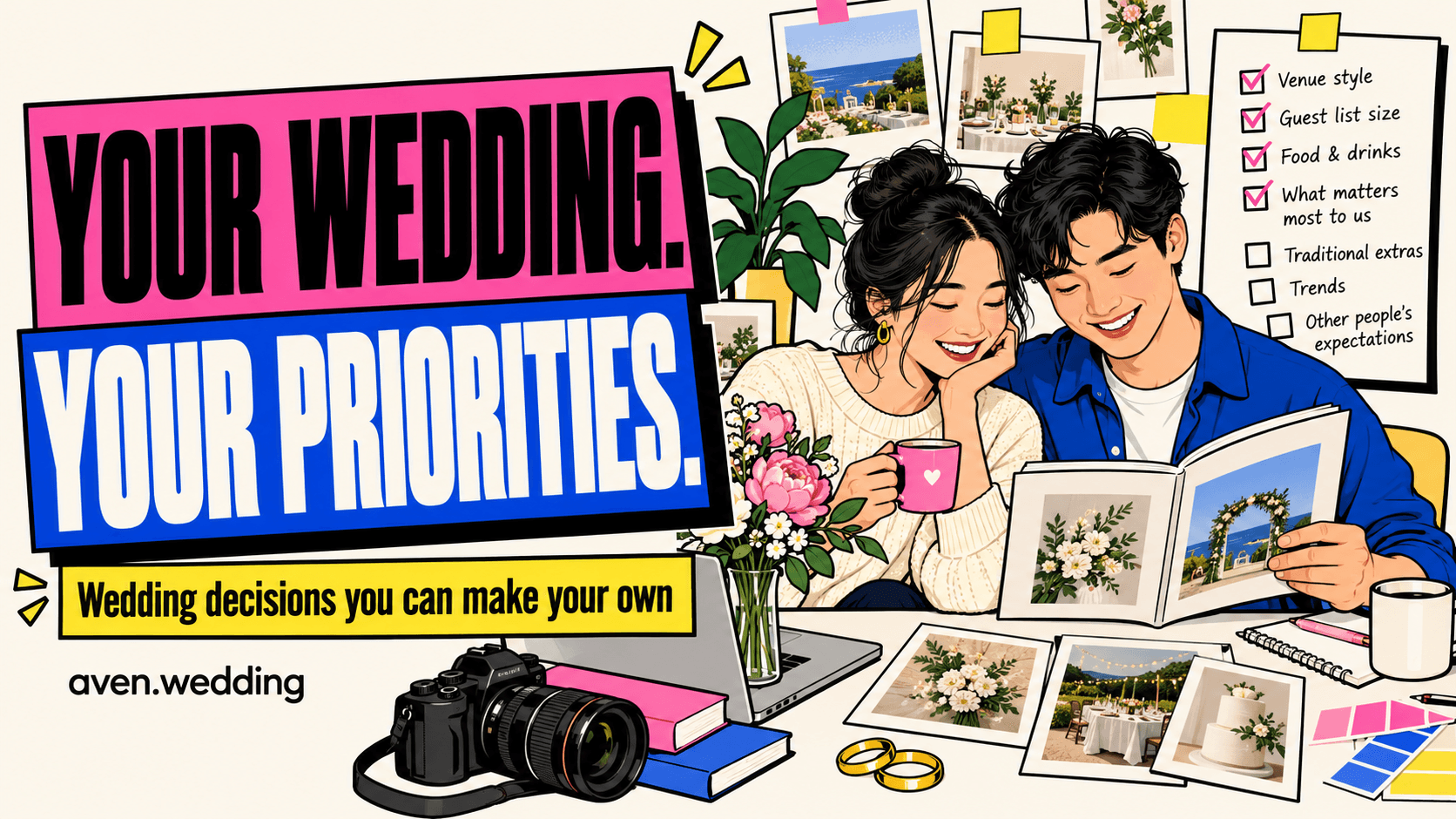
A wedding checklist can quickly start feeling like a list of obligations
You attend a friend’s wedding and notice the live band. Your feed fills up with overseas pre-wedding shoots. Someone asks how many gowns you are changing into, as though the answer cannot possibly be one.
Before long, your wedding plan includes things neither of you actually discussed wanting.
There is nothing wrong with enjoying a big celebration, beautiful decorations or a full day of traditions. But every addition brings a cost, a task or another commitment to your schedule.
You can appreciate someone else’s wedding without needing to recreate it.
This guide explores wedding decisions you can make your own, with practical alternatives and ways to involve your family. For the overall planning process, start with our Ultimate Singapore Wedding Planning Guide.
First, separate requirements from preferences
Some decisions concern the legal marriage process or requirements of your religious ceremony. Others come from family customs, venue contracts or your own preferences. These need different conversations.
| Type of decision | How to approach it |
|---|---|
| Legal marriage requirements | Follow the current official process relevant to your marriage. |
| Religious ceremony requirements | Discuss with your officiant or religious organisation. |
| Family traditions | Ask what they mean and which parts matter to the people involved. |
| Venue and vendor commitments | Check inclusions, deadlines and signed terms before making changes. |
| Personal extras | Decide whether they add something you both value. |
This article focuses on celebration choices. A different format still needs proper planning, clear communication and respect for any commitments you have already made.
1. You can choose the size of your celebration
A ballroom filled with family and friends can be wonderful. So can a small meal where you get to speak properly with everyone.
Start with the people you hope to celebrate with, then explore venues that can accommodate them. Choosing a venue first and expanding your guest list to meet its minimum can create a celebration larger than you intended.
Discuss your families’ guest expectations before committing. A smaller wedding may still need room for relationships that matter deeply to your parents.
Try asking: “Who would each of us really miss if they weren’t there?”
There is no guest count that makes a wedding more meaningful by itself.
2. Your celebration does not have to be a hotel dinner banquet
Depending on your plans, you could consider a restaurant lunch, a private dining room, a catered reception or a ceremony followed by a family meal.
A hotel banquet may suit you because of its facilities, service and convenience. Another venue may better match your atmosphere or guest count. Compare the full experience rather than assuming either option is automatically cheaper.
Check accessibility, dietary needs, privacy, setup time, sound equipment and wet-weather arrangements where relevant.
Try asking: “Do we want a formal programme, or more time to eat and talk?”
3. A pre-wedding shoot can take a different form
If you love the idea of dressing up and making beautiful portraits together, a pre-wedding shoot deserves a place in your plan.
If you feel awkward about a full-day production, ask about a shorter session, casual outfits or a location connected to your relationship. It could be the neighbourhood where you first met or somewhere you spend ordinary weekends.
You can also decide that actual-day photographs are enough.
Before changing plans, consider whether you need images for invitations, welcome signage or a slideshow, and whether a shoot is already included in your package.
Try asking: “What would we use these photos for, and what kind would we enjoy having?”
4. You do not need multiple outfit changes
A second outfit can give you a different look or make it easier to move during the reception. A traditional outfit may also carry personal or family meaning.
But changing takes time: walking back to the room, getting dressed, adjusting accessories and possibly refreshing hair or makeup.
If you are considering several looks, put the changeovers into your actual-day schedule before deciding.
One outfit you love and feel comfortable in is a perfectly reasonable choice. If you do change, ask someone to help and leave enough time to avoid rushing.
Try asking: “Would we rather have another look or another twenty minutes with our guests?”
5. Gatecrashing can match your personalities
For couples including Chinese wedding customs, gatecrashing can be a lively way to begin the day. It does not have to involve games that make anyone uncomfortable.
You could choose a few lighthearted questions, a short challenge based on your relationship or a welcome from the wedding party. If you prefer to skip games, discuss a simple bride-fetching arrangement with your families.
Tell your friends what you are comfortable with before they begin planning. Agree on duration, physical limits and anything you want excluded.
Try saying: “We’d love a fun morning, but keep it short and please skip the food challenges.”
The aim is a morning you remember fondly.
6. Your wedding party can be small—or informal
You can have one close friend beside each of you, a larger group or no formal bridesmaids and groomsmen.
What matters operationally is knowing who handles essential tasks.
If you have no wedding party, arrange responsibility for guest reception, vendor questions, belongings and timeline coordination. Check what your venue coordinator or hired planner actually covers.
If friends are helping, describe the role before asking them to commit. Discuss clothing, expenses, arrival times and how much of the celebration they will spend working.
Try asking: “Who would enjoy being involved, and what can we reasonably ask of them?”
7. Personal vows and speeches do not all have to happen in public
Some couples enjoy speaking in front of their guests. Others would rather share their personal words privately.
You might exchange personal letters, read private vows before the celebration or keep your reception speech brief. These personal choices should be planned separately from any wording required for your solemnisation or religious ceremony.
Give invited speakers a clear time allowance, and check that they are comfortable taking part. Do not assume a parent or friend wants the microphone.
Try asking: “Would these words feel more natural with an audience or just between us?”
8. Entertainment should suit the atmosphere you want
A live band, emcee or photo booth can add a lot to the celebration when it fits your guests and programme.
A smaller gathering may work well with background music and someone confidently guiding the key moments. A lively reception may benefit from professional hosting and entertainment.
Look at the schedule: when will guests use the photo booth, listen to the band or join an activity? Avoid filling every pause simply because it is available.
If you choose recorded music, clarify sound-system access and who operates it.
Try asking: “What do we want guests to do between the main moments?”
9. You can be selective about decorations
A thoughtful setup can make a venue feel personal. That does not mean every surface needs flowers or every corner needs a separate backdrop.
Identify what guests will see and where your key moments happen. A ceremony arrangement and well-planned reception area may matter more to you than several decorative installations.
Ask the venue what is included, and discuss with your decorator whether any pieces can be reused. Moving arrangements may require extra labour and time, so confirm the practical details.
Try asking: “Which areas would feel incomplete without additional styling?”
Choose a look you enjoy, then give it enough space to work.
10. Social media moments can stay optional
A wedding content creator can be a good fit if you want candid phone footage and quick clips. A photographer or videographer may provide a different kind of record.
Before adding another service, compare actual deliverables, coverage and turnaround times. Ask how the people filming will coordinate around important moments.
You can also choose not to plan transitions, staged reactions or several retakes for social posts.
If you want to share your wedding online, leave room for enjoying the day as it happens.
Try asking: “What would we want to keep even if we never posted it?”
11. The programme can have room to breathe
Your day might include a solemnisation, tea ceremony, meal, speeches, portraits and time with guests. Not every wedding needs every element, and not everything needs to happen on the same date.
Before adding another activity, consider travel, waiting, setup and transitions—not just the activity itself.
A short break can give you time to eat, sit down and speak to each other. It also helps when an earlier part of the programme runs late.
Share the final schedule with your venue and vendors so coverage and access arrangements match it.
Try asking: “Where in this timeline do we actually get to enjoy being together?”
Keep the meaning of traditions in the conversation
When a family asks for a tradition, first find out what matters about it. The answer might be honouring elders, bringing relatives together or carrying forward something they remember from their own wedding.
Understanding that meaning gives you a better starting point for discussing the format.
For example, if honouring elders through a tea ceremony matters to your family, focus on making the ceremony comfortable and unhurried before deciding what else belongs in the morning.
Our Chinese Wedding Tea Ceremony Guide can help you plan that part of the celebration.
Avoid announcing changes as a rejection of tradition. Explain what you hope to preserve and where you need a practical adjustment.
Use a simple “keep, adapt or skip” exercise
Set aside half an hour and go through your wedding ideas together. Each partner should explain their preferences before you settle on a joint decision.
| Choice | Keep | Adapt | Skip |
|---|---|---|---|
| Pre-wedding shoot | Full session you are excited about | Short casual shoot | Use actual-day photos |
| Gatecrashing | Games everyone enjoys | A brief welcome activity | Simple fetching arrangement |
| Outfit changes | Several looks with time allocated | One planned change | One outfit throughout |
| Personal vows | Share publicly | Exchange privately | Omit personal vows while retaining required ceremony wording |
| Entertainment | Live performances | A shorter set or simpler setup | No additional entertainment, with hosting and audio still arranged |
If one person feels strongly about keeping something, ask why. It may carry more meaning than the other person realised.
Include cost, time and who needs to be consulted in your final notes.
How to explain your choices without making it awkward
You do not need to defend every preference, but people affected by a change deserve enough information to plan around it.
A few ways to begin:
- To parents: “We want the day to feel meaningful for everyone. Which parts matter most to you? We’re hoping to keep the programme a bit shorter.”
- To your wedding party: “We’re keeping the morning simple. We’d love your help with a few things, and we’ll explain the timings and costs first.”
- To a vendor: “We’d like more time with guests and fewer staged activities. How would you adjust the coverage?”
- To each other: “I’m happy to simplify this, but this other part is something I’ve really been looking forward to.”
Agree on your direction as a couple before giving different answers to different people.
Frequently asked questions
Is it okay to have a simple wedding in Singapore?
Yes. You can choose a simpler celebration while properly organising your marriage process, guest needs and any ceremony requirements. Talk through family expectations early.
Will skipping extras always save money?
Not necessarily. An item may already be bundled into a package, and removing it may not reduce the price. Confirm any price adjustment, substitution or cancellation terms with the provider.
What if our families disagree with our choices?
Find out which elements matter most to them and explain your practical limits. Explore changes to the scale or timing before removing something meaningful.
Should we follow wedding trends?
Include a trend if you enjoy it and it fits your budget and programme. You can also adapt it or leave it out.
How do we know what is worth keeping?
Ask whether it brings meaning, enjoyment or practical value—and whether the cost and time feel worthwhile to both of you.
Build your wedding around the things you value
The choices worth keeping are the ones you understand and feel good about making together.
That might mean a full banquet, a lively gatecrash and several outfit changes. It might mean a tea ceremony, a small lunch and a quiet moment before everyone arrives.
Once you know your priorities, use Aven.wedding to explore the marketplace and look for vendors whose work suits the celebration you have in mind. Ask about the scope you actually need rather than assuming you need the largest package.
For a structured next step, return to our Singapore Wedding Planning Guide and build your checklist around the decisions you have made.