
Blog
What Your Wedding Business Website Needs Before Launch
October 3, 2026 · Updated October 3, 2026
Prepare your wedding business website for launch with clear services, relevant portfolio work and a reliable enquiry process. A practical checklist for Singapore wedding vendors.
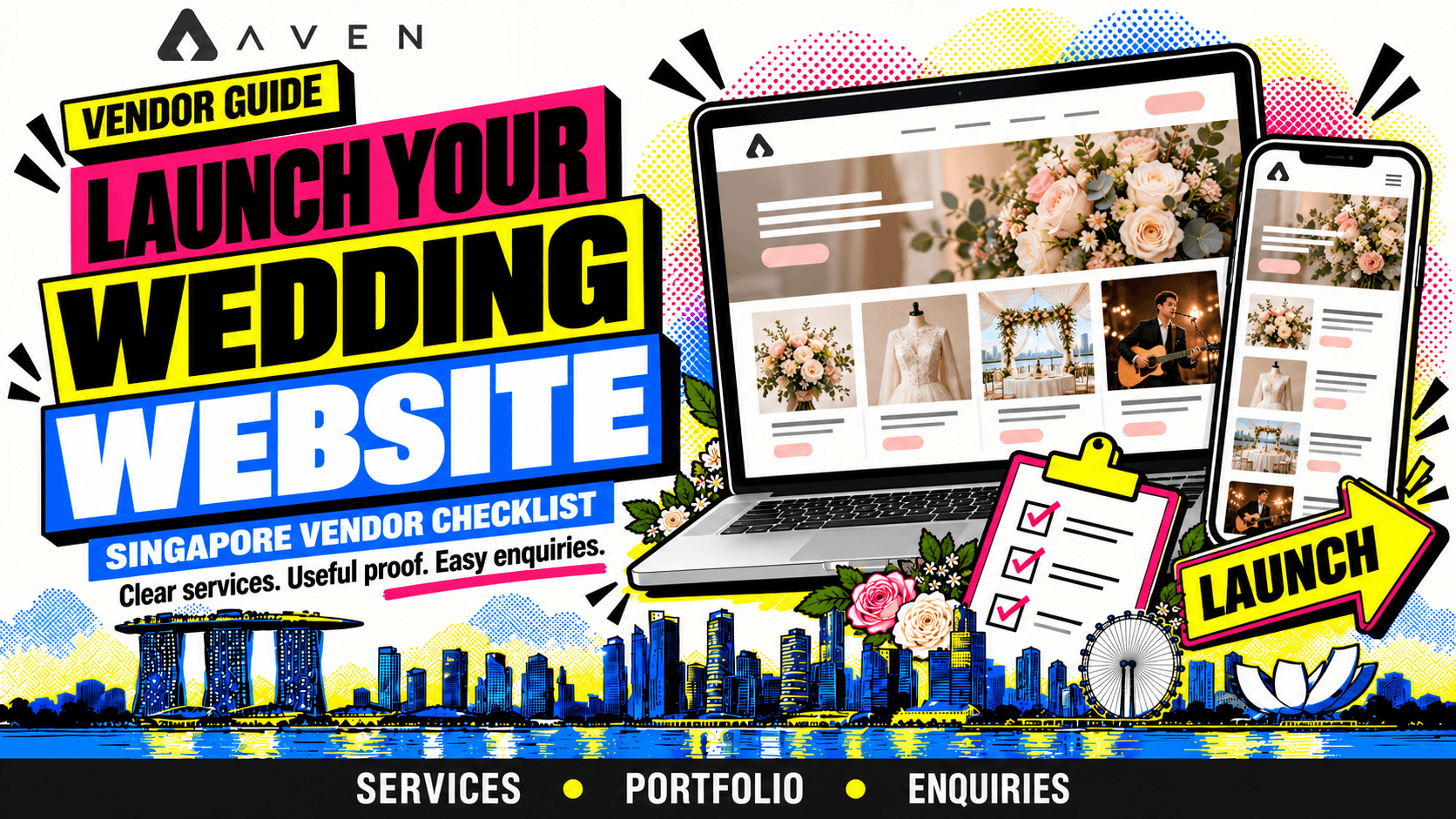
Your website should help couples understand, assess and contact you
A beautiful website is a good starting point. Before launching, check whether a couple can use it to make a decision.
Can they understand your service? Find work relevant to their wedding? See how your packages operate? Contact you without getting stuck?
These questions apply to photographers, bridal boutiques, florists, planners, venues, entertainers, photobooth providers and other wedding businesses.
This guide covers the practical essentials for launching a wedding vendor website in Singapore. You can start with a focused site and expand it as your business develops.
If you are still defining the offer, read how to choose your wedding business niche. For the complete business roadmap, use the Singapore wedding vendor business guide.
1. Give the website a clear purpose
Decide what you want an interested couple to do.
Your main action might be sending an enquiry, requesting a quotation, arranging an appointment or booking a venue viewing.
Build the site around that action. A bridal boutique may need to explain the appointment process before asking someone to book. A florist may need the event details before preparing a quotation.
Use a clear button label, such as “Enquire about your wedding”, “Request a styling quotation” or “Arrange a viewing”.
Make the action available after the information a couple needs to assess your service. Keep a visible contact route in the navigation too.
2. Explain your service near the top of the homepage
The opening section should tell couples what you provide, where you work and what makes your approach relevant.
For example:
“Wedding floristry and venue styling in Singapore, with arrangements designed around your space, priorities and agreed scope.”
Support the introduction with an image that represents your current offer.
Avoid making visitors interpret a poetic tagline before they can identify the business. Your personality can come through in the wording, while the service remains clear.
If you provide several services, introduce them plainly and give each a route to more detailed information.
Our wedding brand positioning guide can help you write a clear opening message.
3. Build a simple page structure
Organise information around what couples need to know.
| Page or section | Main purpose |
|---|---|
| Home | Introduce the business and direct visitors to relevant information. |
| Services | Explain scope, approach, requirements and deliverables. |
| Portfolio | Show relevant work with accurate project context. |
| About | Introduce the people and responsibilities behind the service. |
| Packages or pricing approach | Explain options, inclusions and how quotations work. |
| FAQs | Answer common questions before booking. |
| Contact | Provide a working enquiry route and explain the next step. |
These can be separate pages or clearly labelled sections on a smaller site.
Use navigation labels that visitors can understand easily. If you have several service categories, make their individual scope clear rather than hiding everything under a generic gallery.
4. Write service descriptions that explain the actual offer
A service page should connect your approach with what the couple receives.
Explain:
- The type of work you provide.
- The wedding requirements it suits.
- What preparation is included.
- Who delivers the service.
- What happens during the event or appointment.
- The deliverables or finished result.
- Important exclusions and additional requirements.
- How to take the next step.
For Singapore weddings, clarify arrangements that affect the scope, such as multiple locations, customary ceremonies, early preparation or venue setup access.
Use accurate examples rather than implying every couple follows the same programme.
Our wedding vendor service-page guide explores this in more detail.
5. Show relevant portfolio evidence with context
Select work that supports the service you want couples to book.
A photographer can show coherent galleries. A florist can include wider installation views. A venue can show accurate layouts and different setups. An entertainer can provide recordings that demonstrate the performance.
Add short descriptions explaining the project, scope and your contribution. Label practice work, styled shoots and assisted projects accurately.
Check that you have the necessary permissions to publish the material, including any supplied media or third-party content.
Avoid using attractive work that creates expectations your current service cannot meet.
Read how to build a wedding vendor portfolio if you are still developing the evidence.
6. Make packages and quotations understandable
Whether you publish prices or prepare individual quotations, explain how the offer works.
If you show a package, state its scope and inclusions. If you use a starting price, explain what it covers and what changes the final amount.
Relevant details may include coverage hours, team size, installation scope, fitting arrangements, rental duration, delivery timing or additional locations.
If every brief requires a quotation, tell couples what information you need and what happens after they submit it.
Keep package information consistent with your enquiry replies and agreements. Remove expired promotions and outdated inclusions.
Use our wedding package structure guide to organise the options.
7. Introduce the people behind the business
Help couples understand who they will work with.
Introduce the business owner or team, explain relevant experience and clarify how work is assigned.
If the person shown in your portfolio is not guaranteed to deliver every booking, explain the arrangement. A team-based service should make responsibilities and selection processes understandable.
Use accurate credentials and descriptions. Where a project involved several vendors, distinguish your role.
An about page can also explain your working approach and why it matters to the clients you serve. Keep that connected to the service rather than relying entirely on a long personal story.
8. Use genuine feedback with appropriate permission
Testimonials are most useful when they describe something specific about the service.
A comment about clear coordination, comfortable portraits or helpful fitting advice gives couples information about the experience.
Use real feedback and preserve its meaning. Obtain appropriate permission for publication and avoid adding details the client did not provide.
If you are new, use your portfolio and process to demonstrate your work. Do not invent testimonials or present collaborator feedback as a client booking review.
Our testimonial marketing guide covers how to use feedback across your marketing.
9. Keep the first enquiry form manageable
Collect enough information to assess the request without making the couple complete a full planning questionnaire.
A useful starting form may ask for:
- Name.
- A contact method.
- Wedding date, with an option for an unconfirmed date.
- Venue or locations, if known.
- Required service.
- Approximate scope or coverage.
- A short message about priorities.
Adapt it to your category. A venue enquiry may need an estimated guest count. A bridal appointment may need different information from a photography booking.
Explain required fields and allow “not confirmed” where that is a realistic answer.
State how the enquiry will be used and provide a relevant privacy notice. Keep detailed planning questions for the appropriate later stage.
10. Test the entire enquiry journey
Submit a real test enquiry before launch.
Check that:
- The form works on a phone and computer.
- The submission reaches the correct inbox or system.
- You receive all the information entered.
- The couple sees a clear confirmation.
- Any automatic reply is accurate.
- Your reply reaches the sender.
- WhatsApp, email and appointment links open correctly.
Make sure someone is responsible for monitoring each contact route.
Tell couples what happens next and give a response expectation you can maintain. An enquiry should not imply that a date is reserved unless your process actually provides that.
Read how to reply to a wedding enquiry to prepare the next stage.
11. Check the mobile experience and accessibility
Use the site on a phone rather than relying only on an editor preview.
Read the text, open the menu, browse the portfolio and complete the enquiry form. Check that important information is not hidden by cropping or overlapping elements.
Use readable text, clear contrast and descriptive form labels. Ensure the site can be navigated with a keyboard and that interactive controls have understandable names.
Add useful text alternatives for meaningful images. Provide captions or transcripts where needed to make important video information accessible.
Avoid putting essential package information only inside an image. Keep the information available as readable text too.
12. Set up basic search visibility
Give important pages descriptive titles and useful summaries. Explain your services and location naturally in the page content.
Use clear links between the homepage, services, portfolio and contact pages. Each important page should be reachable through the site.
Before launch, ask whoever manages the website to check that public pages are not unintentionally blocked from indexing. Where appropriate, set up Google Search Console and submit the site’s sitemap.
Google’s SEO Starter Guide explains these foundations. Search visibility develops over time; launching a site does not guarantee inclusion or a particular position.
For the vendor-specific next steps, read SEO for wedding vendors in Singapore.
13. Confirm access, ownership and maintenance
Make sure the business can control the website after launch.
Confirm access to the domain, hosting, content editor, email accounts and any connected enquiry tools. Record who is responsible for renewals and ongoing updates.
Use secure account arrangements and keep recovery details current. Limit access to what each team member needs.
Agree on a backup and recovery process with the person managing the site. Keep a record of connected services so you can address problems or change providers later.
If an external designer builds the website, clarify handover, ongoing support, asset licences and the work included after launch.
14. Measure enquiries as well as website visits
Decide what information will help you improve the site.
Track meaningful actions such as completed enquiries, appointment requests or viewing requests. Connect those enquiries to later booking outcomes where your process allows.
Review whether visitors are asking questions the website should already answer. Repeated confusion about scope or pricing may point to an information gap.
Use measurement tools with appropriate privacy arrangements. Avoid collecting information without a clear purpose.
For a practical approach, read how to track wedding vendor marketing results.
Visits alone do not tell you whether the website is attracting suitable clients.
Frequently asked questions about wedding business websites
Can I launch with a one-page website?
Yes, if it clearly explains the offer, shows useful evidence and provides a working enquiry route. Add separate pages when the services or amount of information justify them.
Do I need a blog before launch?
No. Prioritise accurate service information, portfolio work and contact functionality. Add useful articles when you have a clear purpose for them.
Should I publish my prices?
Choose an approach that fits your service. Published packages need clear scope; custom quotations need a clear explanation of the information and process involved.
Can I use a wedding platform instead of a website?
A platform profile can be one route to enquiries. Your own website provides another place to explain your business and services. Compare the roles in our wedding platforms versus your own website guide.
What if I do not have many client projects?
Use relevant examples with accurate labels and explain your current experience. Avoid making the website appear to represent work you did not deliver.
How often should I update the site?
Update it when packages, availability arrangements, team details or contact information change. Review it regularly for broken links and outdated material.
Your wedding website launch checklist
Before sharing the website, confirm that:
- The homepage clearly identifies your service.
- Navigation helps couples find relevant information.
- Service scope and package arrangements are accurate.
- Portfolio roles and project labels are clear.
- Published material has the necessary permissions.
- Team responsibilities are understandable.
- Testimonials are genuine.
- The enquiry form works from submission to reply.
- Contact links and confirmation messages are correct.
- Mobile use and accessibility have been checked.
- Basic search settings have been reviewed.
- Business access and maintenance responsibilities are documented.
- You have a practical way to review enquiry results.
Launch a website that makes the service understandable and the next step reliable. Improve it using the questions and behaviour of the couples who use it.
Continue with how to improve wedding website conversions, or return to the complete Singapore wedding vendor business guide for the wider roadmap.