
Blog
Wedding Vendor Marketing in Singapore: How to Get Found by Couples
October 3, 2026 · Updated October 3, 2026
A practical marketing guide for Singapore wedding vendors across every category. Learn how your website, search presence, vendor marketplace profile, social content and referrals can work together to support enquiries and bookings.
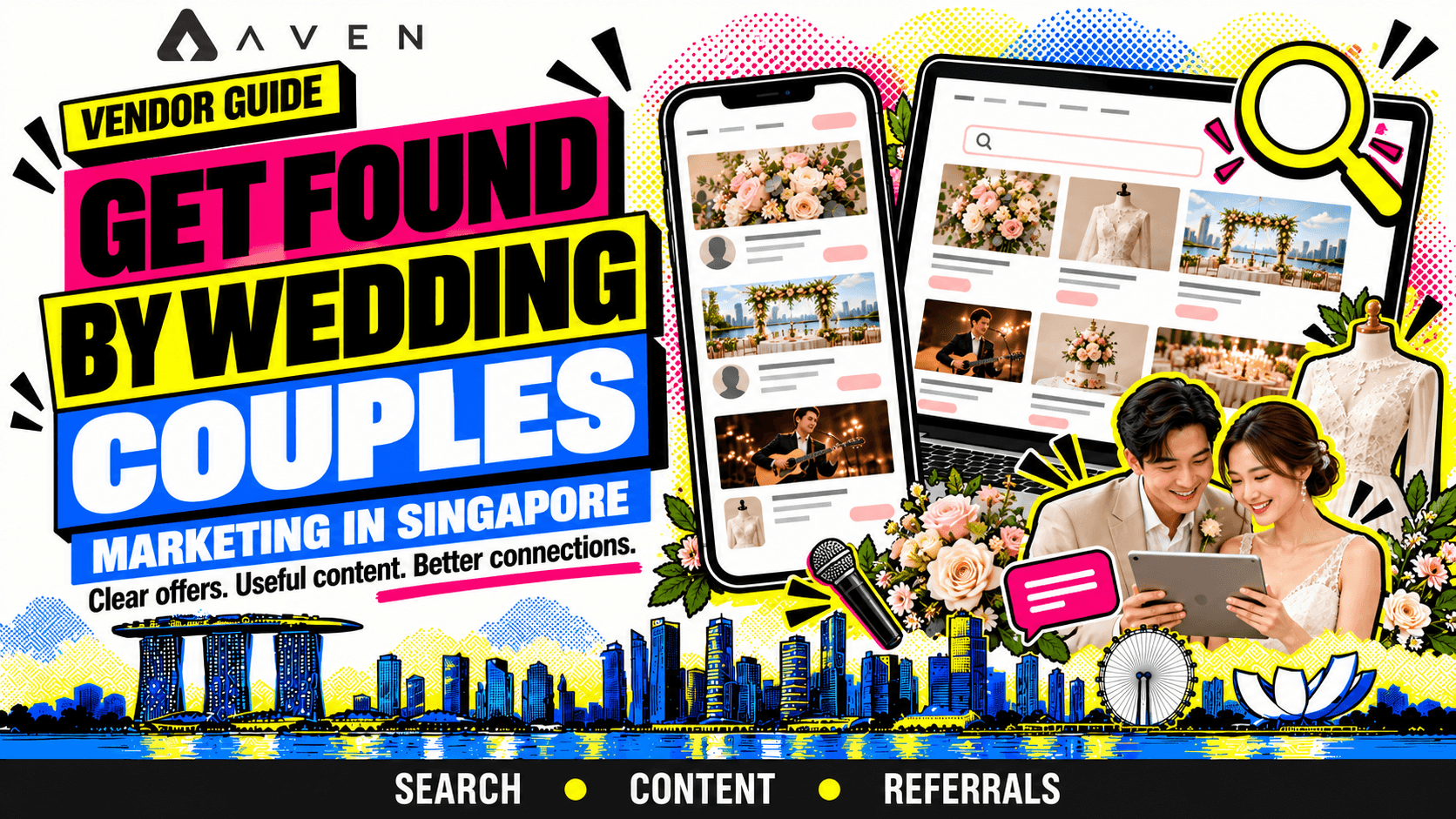
Make it easier for suitable couples to discover your business
Couples can discover a wedding vendor through several routes.
They might search online, browse a vendor marketplace, see your work on social media or receive a recommendation from another vendor. They may then visit your website before deciding whether to enquire.
Your marketing needs to support this journey.
For Singapore wedding vendors, the aim is to make your business easy to find, your service easy to understand and your next step easy to take.
This applies to venues, bridal boutiques, makeup artists, florists, stylists, planners, photographers, videographers, entertainers, caterers, photobooth providers and other wedding businesses.
This guide brings together the discovery and marketing section of our complete Singapore wedding vendor business guide.
Start with the services and couples you want to attract
Before choosing marketing channels, decide what you want to promote.
Identify:
- Your core services.
- The weddings and settings those services suit.
- The preferences your approach serves well.
- The practical scope you can deliver.
- The work you want more of.
A venue might focus on intimate celebrations. A florist might specialise in contemporary ceremony and reception styling. An entertainment business might offer multilingual emcee services or acoustic performances.
These details help you choose examples, write descriptions and assess enquiries.
Use our guide to identifying ideal wedding clients to clarify your audience, then explore wedding brand positioning to explain your approach.
Build a clear journey from discovery to enquiry
Think of your marketing as a connected sequence.
- A couple discovers your business.
- They explore your work and services.
- They assess whether you suit their wedding.
- They send an enquiry.
- You clarify the brief and guide the booking conversation.
Each step needs useful information.
A social post can introduce your work. A service page can explain the scope. A vendor profile can help couples compare options. Your enquiry process can collect the details needed to respond.
Check what happens after someone clicks a link. Do they reach a relevant page? Can they understand the service? Is the enquiry route obvious?
Our website conversion guide explains how to improve that transition.
Give your website a clear role
Your website can bring your service information, portfolio and enquiry process together.
Useful foundations include:
- A clear description of your business.
- Dedicated information for your main services.
- Representative portfolio examples.
- Package scope or quotation guidance.
- Relevant information about your team and process.
- A straightforward enquiry route.
The priorities vary by category.
A venue should help couples understand its spaces and viewing process. A boutique should explain appointments and attire options. A styling business should show its work and clarify what it can provide.
Start with our wedding business website checklist, then use the service page guide to develop the main pages.
Use SEO to connect services with relevant questions
Search marketing starts with understanding what couples need to know.
Some searches relate directly to a service. Others concern preparation, package scope or practical requirements.
Choose topics that match your actual offering and explain them clearly on the relevant page.
For example, a bridal boutique can describe its gown appointments and rental options. A photobooth provider can explain booth formats, session scope and setup requirements.
Avoid treating every page as a place to repeat the same phrase. Give each page a clear purpose and useful information.
Our SEO guide for Singapore wedding vendors introduces the foundations. The wedding business keyword guide helps you choose focused topics.
Make service pages useful before asking for an enquiry
A couple should be able to understand your offering before contacting you.
For each core service, explain:
- What you provide.
- Who or what wedding arrangements it suits.
- What the scope includes.
- Which factors change the quotation.
- What preparation or coordination is involved.
- What information you need for an enquiry.
Use examples that reflect your current offering.
If you show an upgraded setup, identify the additions. If a package covers a specific duration or quantity, state it.
Clear service information gives you a stronger starting point for consultations.
Read our guide to writing wedding vendor service pages for a practical structure.
Review your local business presence
Keep the public information about your business accurate.
Check your business name, contact details, appointment arrangements, service descriptions and website links across the channels you use.
If your business is eligible for a Google Business Profile, describe how and where you serve customers accurately. A studio-based business and a business that travels to wedding venues may need different arrangements.
Do not assume a venue you have worked at is your business location.
Our Google Business Profile guide for wedding vendors covers eligibility, business information and practical profile considerations.
Use the Aven marketplace to support discovery and bookings
The aven.wedding vendor marketplace allows couples to connect with vendors, send enquiries, make bookings and track their budgets directly.
Your vendor presence can help couples understand your business while they explore options for their wedding.
Prepare clear information about:
- Your main services.
- Your approach.
- Relevant portfolio examples.
- Package scope or quotation factors.
- Practical requirements.
- The details needed for an enquiry.
Keep this information consistent with your website.
When discussing a booking, make the agreed scope and quotation easy to understand so couples know what they are booking and how it fits their budget.
Our wedding vendor profile guide explains how to prepare a useful profile.
Let platforms and your website work together
Your website and vendor marketplace presence can support different parts of the same journey.
A marketplace can help couples discover and compare businesses. Your website can provide deeper service information, project examples and details about your approach.
Plan how couples move between these destinations where links are supported.
For example, a couple may discover your styling business through a marketplace, explore a relevant project on your website and then return to enquire.
Keep the information aligned so the journey feels clear.
Our guide to wedding platforms versus your own website explores how to assign each channel a useful role.
Use social content to explain your work
Social content can show the service behind the finished result.
Useful examples include:
- A bridal boutique explaining its appointment process.
- A florist showing how a brief becomes an installation plan.
- An entertainer sharing a representative performance.
- A caterer explaining a service format.
- A planner showing how programme details are coordinated.
- A makeup artist explaining preparation for a trial.
Give each post a clear takeaway.
When inviting an enquiry, state which details couples should share. Link to the relevant service information where appropriate.
Our social media guide for wedding vendors covers this channel in more detail.
Build genuine relationships with other vendors
Vendor relationships can help couples find services that fit their plans.
A useful relationship starts with understanding each other’s work, communication and practical requirements.
Possible opportunities include:
- Referring couples when another service is suitable.
- Sharing appropriately credited project work.
- Collaborating on a clearly planned styled shoot.
- Discussing how your services can coordinate better.
- Learning about each other’s scope and availability process.
Make recommendations based on fit and experience.
If you collaborate on content, agree on responsibilities, usage and credits before publishing.
Read our wedding vendor referral network guide and styled shoot guide for practical preparation.
Prepare the enquiry journey before investing in advertising
Advertising needs a clear destination and a working response process.
Before starting a campaign, check:
- The promoted service is clearly explained.
- The examples represent the offer.
- The landing page works on a phone.
- The enquiry route works.
- Your team can respond to enquiries.
- You have a way to assess the results.
Choose a specific service and audience for the campaign rather than trying to promote everything at once.
For example, a boutique might promote appointments for its current collection. An entertainment business might promote a defined performance format.
Our Meta ads guide for wedding vendors and advertising budget guide cover campaign planning.
Respond in a way that continues the marketing promise
Your first reply is part of the experience couples assess.
A clear response should acknowledge the enquiry, address what you can answer and explain the next step.
If you need more information, ask focused questions. If you need to check availability or prepare a quotation, explain the process.
Make sure your response matches the service described publicly. Couples should not discover significant differences between the profile and the quotation without an explanation.
Our wedding enquiry reply guide covers the first response. The guide to converting enquiries into bookings explains the wider conversation.
Track which channels support suitable enquiries
Assess marketing through the enquiries and work it helps generate.
Useful information includes:
- Where couples discovered your business.
- Which service they asked about.
- Whether the enquiry fits your offering.
- Whether it progressed to a consultation or quotation.
- Whether it became a booking.
- The time and spending involved in the channel.
Ask couples how they found you where appropriate. Record what they tell you without assuming one channel explains the whole decision.
A couple may have seen your social content, received a recommendation and visited your website before enquiring.
Our marketing results guide explains how to build a manageable review process.
Choose a manageable starting plan
Begin with the channels you can maintain well.
A practical sequence is:
- Clarify your core services and audience.
- Review your website’s main service information.
- Prepare or update your vendor profile.
- Check your enquiry process.
- Publish representative social content.
- Review where suitable enquiries come from.
Adjust the sequence to your business.
If you already receive enquiries but couples misunderstand the scope, improve your descriptions first. If the information is clear but few people discover it, focus on the channels that introduce your business.
For a new business, our first 90 days guide connects these tasks with wider setup priorities.
Frequently asked questions about wedding vendor marketing
Does this approach apply to every vendor category?
Yes. The framework applies across categories, but the examples, service information and enquiry questions should reflect your business.
Should I start with social media or a website?
Consider where couples currently discover you and what information they need next. Make sure there is a clear place to understand your services and enquire.
Can I use a vendor platform alongside my website?
Yes. Keep the information consistent and give each destination a useful role.
Should I advertise immediately?
Check the service information and enquiry process first. Then choose a defined offer, budget and way to assess results.
How do I know whether my marketing is working?
Review suitable enquiries, progression and bookings alongside channel activity and spending.
Will this guarantee top search rankings or bookings?
No. Results depend on several factors, including demand, competition, availability, service fit and execution. Use the framework to improve the journey and assess what works for your business.
Connect discovery with a clear next step
Before expanding your marketing, check these foundations:
- Your core services are easy to understand.
- Your examples represent your current offering.
- Your website and vendor profile contain consistent information.
- Couples know what to send in an enquiry.
- Your response process is ready.
- Your team can deliver the promoted scope.
- You can review where suitable enquiries come from.
Then develop the part of the journey that needs attention.
Start with our SEO guide for wedding vendors, improve your vendor profile, or review your website enquiry journey.
For the wider framework connecting marketing, pricing, sales and operations, return to the complete Singapore wedding vendor business guide.